
NPT vs NPTF Threads: Sealing Methods, Tolerances, and Tap Selection

NPT and NPTF can share nominal size, pitch, taper, and appearance, but they are not interchangeable sealing specifications. That distinction matters when sourcing tapped components, repairing ports, or investigating leakage: a connection can assemble smoothly and still not provide the sealing behavior required by the drawing.
NPT is a general-purpose tapered pipe thread that normally uses compatible sealant. NPTF is a Dryseal tapered pipe thread designed to seal through controlled geometry without a separate compound when both threads conform and assembly is correct. This design intent does not mean sealant or lubricant is never used; component instructions, materials, surface condition, media, and service requirements govern assembly.
This guide explains the practical differences in sealing, crest-and-root contact, designation, inspection, and tap selection for B2B procurement teams and mechanical engineers.
NPT vs NPTF: The Essential Difference
NPT commonly refers to the American National Standard Taper Pipe Thread covered by ASME B1.20.1. NPTF refers to a Dryseal tapered pipe thread covered by ASME B1.20.3; the letter F is associated with Fuel in the designation. Inspection of Dryseal pipe threads is addressed by ASME B1.20.5. The contract should identify the applicable standard and revision rather than relying on a general catalog description.
At corresponding nominal sizes, NPT and NPTF use a 60-degree included thread angle and a nominal taper of 1:16 on diameter. These similarities explain why mating parts may engage. They do not make the two specifications equivalent. Exact basic dimensions, truncation limits, gaging requirements, and tolerances must always be taken from the applicable standard and the component drawing.
| Comparison point | NPT | NPTF |
|---|---|---|
| Common description | General-purpose tapered pipe thread | Dryseal tapered pipe thread, often called National Pipe Taper Fuel |
| Principal standard | ASME B1.20.1 | ASME B1.20.3, with Dryseal gaging addressed by ASME B1.20.5 |
| Shared nominal geometry | 60-degree included angle and 1:16 taper on diameter | 60-degree included angle and 1:16 taper on diameter |
| Primary sealing concept | Tapered flank engagement assisted by a suitable thread sealant | Controlled crest-to-root contact, followed by or coincident with flank contact |
| Crest and root relationship | Clearance can remain and form a helical leakage path | Truncation is controlled to interrupt that leakage path |
| Sealant expectation | Normally required unless the approved joint design states otherwise | Designed not to require sealant; a compatible sealant or lubricant may still be specified |
| Typical functional inspection | NPT gages and procedures, commonly beginning with L1 inspection | Coordinated Dryseal gaging, commonly L1 with L2 externally or L3 internally, plus any required truncation checks |
| Pressure meaning | The designation alone does not establish a component pressure rating | Dryseal does not automatically mean a higher pressure rating |
| Correct tap selection | Use an NPT tap specified for the required internal thread | Use an NPTF tap and inspection plan specified for the required Dryseal thread |
How Each Thread Creates a Seal
NPT: Tapered Engagement With Sealant
As an NPT external thread enters an NPT internal thread, the taper brings the flanks into increasingly firm contact. However, clearance may remain between the crest of one thread and the root of its mating thread. Because that clearance follows the thread helix, it can provide a continuous spiral leakage path from one side of the joint to the other.
A suitable PTFE tape, paste, anaerobic compound, or other approved sealing system fills this path and supports pressure-tight assembly. The word suitable is important. Sealant selection depends on the fluid or gas, temperature, materials, cleanliness requirements, curing needs, and any restrictions on contamination. Excess compound can enter a system, while excessive tape or uncontrolled tightening can increase the risk of distortion or port damage. There is no single torque or tightening-turn value that safely covers every NPT joint.
NPTF: Controlled Crest-to-Root Contact
NPTF modifies and more closely controls the crest and root geometry. In general terms, the roots are truncated more than the crests, creating wider root flats. During assembly, the roots contact and can slightly deform the mating crests at the major and minor diameters. This contact occurs before or together with full flank contact and is intended to close the spiral leakage paths.
The resulting metal-to-metal contact is why NPTF is commonly called Dryseal. The term describes the thread design, not a guarantee for every manufactured part or service condition. Damaged crests, incorrect truncation, galling, contamination, unsuitable coatings, mixed thread forms, or improper assembly can defeat the intended mechanism. Both halves of the connection must conform to the required specification.
Does NPTF Ever Need Sealant or Lubricant?
NPTF is designed to make sealing compounds unnecessary under its intended conditions, but the component manufacturer may still require or recommend a compatible lubricant or sealant to reduce friction, limit galling, accommodate surface imperfections, or meet a qualification procedure. Galling-sensitive material combinations deserve particular attention.
Do not add or omit a compound by habit. Confirm the equipment instructions and media compatibility; a product suitable for water may be unacceptable for oxygen, fuel, hydraulic fluid, refrigeration, or another specialized service. Resolve contamination restrictions during design and supplier qualification, not on the assembly line.
Why Thread Accuracy and Tap Geometry Matter
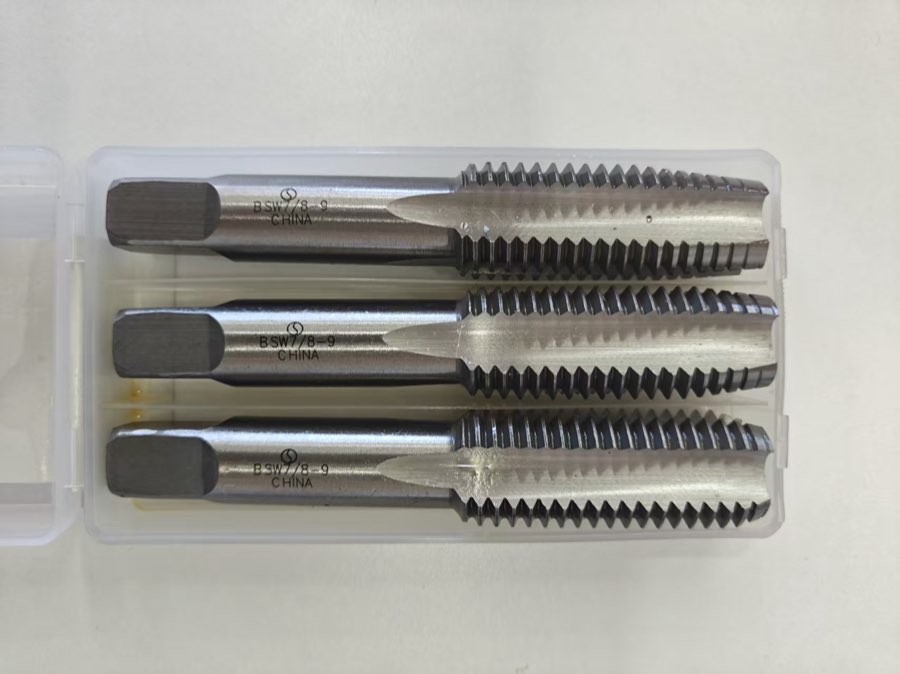
For internal NPTF threads, tap geometry is directly connected to the Dryseal function. Pitch diameter and taper alone do not describe the complete requirement. Crest and root truncation, thread form, useful thread length, surface condition, and the relationship between gage readings all influence whether the finished port conforms.
An NPT tap should not be substituted for an NPTF tap simply because both carry the same nominal size and threads per inch. The reverse substitution is equally inappropriate without engineering approval. A tool that produces a thread which accepts a mating fitting has not necessarily produced the specified thread. Mechanical engagement is only an assembly observation; it is not an acceptance test.
Tool condition also matters. A worn or damaged tap can alter the thread form and surface finish even when its original geometry was correct. Chips, built-up edge, runout, inadequate coolant, poor alignment, and an incorrectly prepared hole can compound the problem. Production approval should therefore combine the right tap specification with controlled machining parameters and the required gaging process.
Designation, Marking, and Inspection Differences
Use the Full Drawing and Purchase Designation
NPT and NPTF are difficult to distinguish reliably by eye. A pitch gage may confirm threads per inch, but it cannot establish the complete Dryseal specification. Identification should start with the drawing, port specification, fitting documentation, and inspection record, not with trial assembly or the appearance of the crests.
A complete purchase callout should include nominal size, pitch, and thread form, such as NPT or NPTF. Where required, it should also identify the NPTF class, governing standard and revision, coating condition, and inspection plan. Examples such as 1/4-18 NPT and 1/4-18 NPTF communicate different requirements even though their size and pitch match.
Component and tap markings should be checked against those documents. Not every small fitting carries a complete marking, and the absence of a visible NPTF mark does not prove that the thread is NPT. Conversely, an abbreviated label should not be treated as proof of conformance. The leading F in a notation such as FNPT commonly denotes female, whereas the final F in NPTF belongs to the Dryseal designation; keeping the complete notation avoids this ambiguity.
NPT Inspection
NPT acceptance commonly uses the specified L1 plug gage for internal threads or L1 ring gage for external threads, together with any additional checks imposed by the standard or drawing. The gage result evaluates defined thread characteristics; it does not certify the pressure rating or leak performance of the finished assembly. Coating allowance, surface condition, effective thread length, and other drawing requirements may need separate control.
NPTF Inspection
NPTF uses a coordinated Dryseal inspection approach. In the usual arrangement, external product threads are evaluated with L1 and L2 gages, while internal product threads use L1 and L3 gages. Their relationship provides information beyond a single hand-tight position. NPTF Class 1 and Class 2 concern inspection requirements rather than pressure classes. Class 2 adds explicit inspection of crest and root truncation, while Class 1 generally relies on controlled tooling or other means for those features. The applicable standard and contract remain the authority for acceptance.
Gages must be correct for the thread system, clean, undamaged, and maintained under an appropriate calibration system. Inspectors should record the required readings rather than reducing the result to a generic pass stamp. Where leakage is critical, thread conformance and assembly validation are complementary: a successful gage check does not replace a specified pressure or leak test.
Common Confusions That Lead to Leaks or Incorrect Orders
- Same pitch means same thread. Pitch and taper do not capture the different crest, root, and inspection requirements.
- NPTF means no sealant in every application. Dryseal is the design intent; approved assembly instructions may still call for a compatible compound or lubricant.
- A mixed NPT and NPTF joint remains Dryseal. Corresponding parts may engage, but a mixed combination should not be assumed to deliver NPTF-to-NPTF sealing performance.
- NPTF is automatically stronger or higher pressure. The designation defines a thread and sealing system, not the rating of the complete fitting or port.
- NPT is the same as NPS or NPSM. Straight pipe-thread designations have different functions and should not be substituted for tapered threads.
- NPT and BSPT are interchangeable. They belong to different thread systems with different geometry. A forced fit is not evidence of compatibility.
- A nominal pipe size is a measured outside diameter. Nominal pipe sizing is a designation system. Use standard tables and drawings rather than inferring size from a quick caliper reading.
Tap Selection and OEM Procurement Checklist
Good procurement starts with the finished internal thread, not with a generic tap description. A tap factory needs enough application information to distinguish a conforming production tool from a tool that merely shares the same nominal label. When working with a thread tap manufacturer in China, buyers can reduce sampling loops and quality disputes by putting the following items in the RFQ and technical agreement.
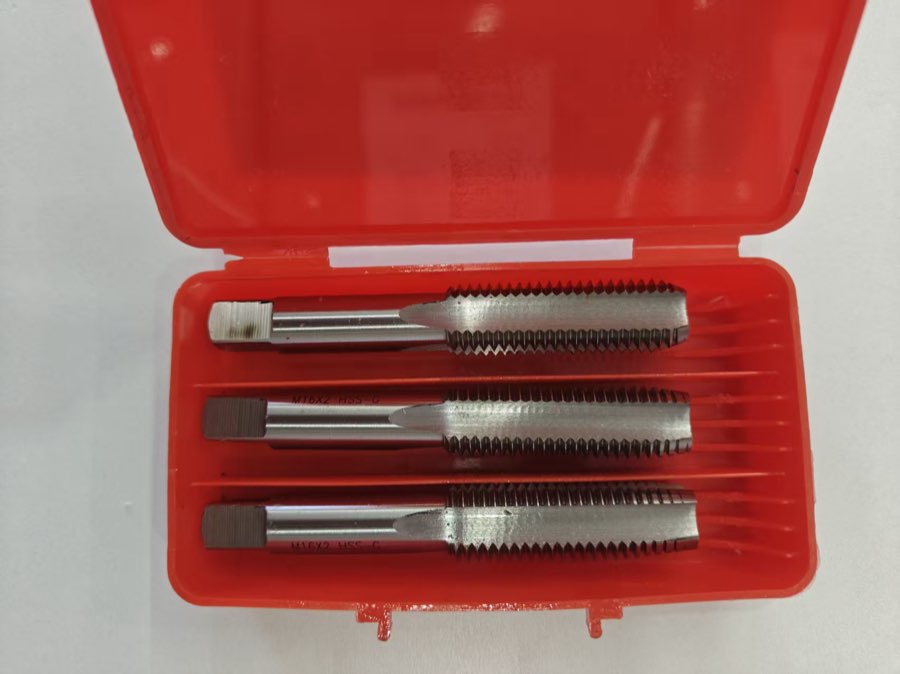
- Define the finished thread. State NPT or NPTF, nominal size, pitch, applicable standard and revision, and NPTF class where required. Include the port drawing and useful thread length.
- Identify the mating component. Confirm its documented thread form. Do not approve a mixed NPT/NPTF connection by assumption.
- Describe the workpiece. Provide material, hardness or condition, port type, through or blind geometry, coating or plating plan, and any casting or forging details that affect machining.
- Share the process window. Identify machine type, tapping method, alignment constraints, coolant or cutting fluid, and planned production quantity. Ask the supplier to recommend tool material, geometry, and surface treatment for that application rather than choosing by appearance.
- Control hole preparation. Use the tap supplier's validated recommendation and the applicable component requirements for the pre-tap hole and chamfer. Do not apply a universal drill chart to every material and thread specification.
- Agree on inspection before production. Specify the required gages, readings, truncation checks, sampling plan, calibration expectations, and whether inspection occurs before or after coating.
- Validate on actual parts. Run a controlled trial, inspect the tapped threads, assemble the intended mating components, and perform the required leak or pressure validation. Record tool life against an agreed baseline without treating a trial result as a universal guarantee.
- Plan repeatability and changes. Align on tool identification, packaging, reorder references, and notification of geometry, material, coating, or process changes. Keep approved samples and inspection records traceable to the purchase specification.
This approach also separates tooling responsibility from assembly responsibility. The tap supplier can support tool selection and thread conformance, while the component designer remains responsible for port strength, material compatibility, assembly instructions, and system-level sealing validation.
Selection Guidance for Engineers and Buyers
Specify NPT for an approved sealant-assisted general-purpose connection. Specify NPTF when the design requires Dryseal threads and production can control their geometry and inspection. Evaluate vibration, thermal cycling, corrosion, disassembly, port material, and media compatibility for either choice. Preserve the original specification during replacement or repair unless engineering approves a change. For new OEM projects, resolve the designation and gaging plan before sample approval; do not compensate for an unsuitable joint design with extra tightening or sealant.
Frequently Asked Questions
Can NPT and NPTF threads be assembled together?
Corresponding sizes can often engage mechanically, but engagement does not establish functional interchangeability. A mixed NPT/NPTF joint should not be treated as a verified Dryseal connection. Confirm both component specifications and the equipment manufacturer's permitted combination and sealing procedure.
Does NPTF always eliminate the need for thread sealant?
No universal assembly rule should be drawn from the Dryseal name. NPTF is designed to seal without a separate compound when conforming threads are correctly assembled, but an approved sealant or lubricant may still be specified for sealing robustness, lubrication, galling control, or a particular service. Follow the component and system requirements.
Can an NPT tap be used to produce an NPTF internal thread?
It should not be assumed acceptable. Matching nominal size, pitch, and taper do not prove that the tap will produce the required NPTF crest, root, and gaging relationships. Use the specified NPTF tooling and verify the finished thread with the applicable Dryseal inspection process.
Is NPTF stronger or suitable for higher pressure than NPT?
The NPTF designation does not by itself provide a higher strength or pressure rating. Pressure capability depends on the complete fitting or port design, material, dimensions, condition, assembly, and governing product standard. Dryseal describes a sealing approach, not a pressure class.
Can visual inspection distinguish NPT from NPTF?
Not reliably. Their general form and corresponding pitch are too similar for dependable visual identification. Review the drawing, product documentation, complete designation, and inspection records. A pitch gage or trial fitting cannot replace those checks.
Are NPTF Class 1 and Class 2 pressure ratings?
No. They concern product-thread inspection requirements. Class 2 adds explicit crest-and-root truncation inspection to the coordinated gaging approach. Select and inspect the class according to the applicable standard and contract, not according to a desired system pressure.
What should an OEM buyer send when requesting a pipe tap quotation?
Send the full thread designation, standard and revision, NPTF class if applicable, workpiece drawing, material and hardness, coating condition, machine and coolant information, production expectations, and required inspection plan. This information is more useful to a tap factory than a nominal size alone and supports a meaningful sample approval.
Conclusion
NPT and NPTF may look alike, but their sealing logic and inspection requirements are different. NPT normally relies on an approved sealant to close crest-and-root leakage paths. NPTF uses controlled geometry for Dryseal metal-to-metal contact, with sealant or lubricant still subject to the actual assembly specification. For reliable OEM production, specify the complete thread, select the correct tap, inspect with the required gages, and validate the assembled joint under its intended service conditions.


