
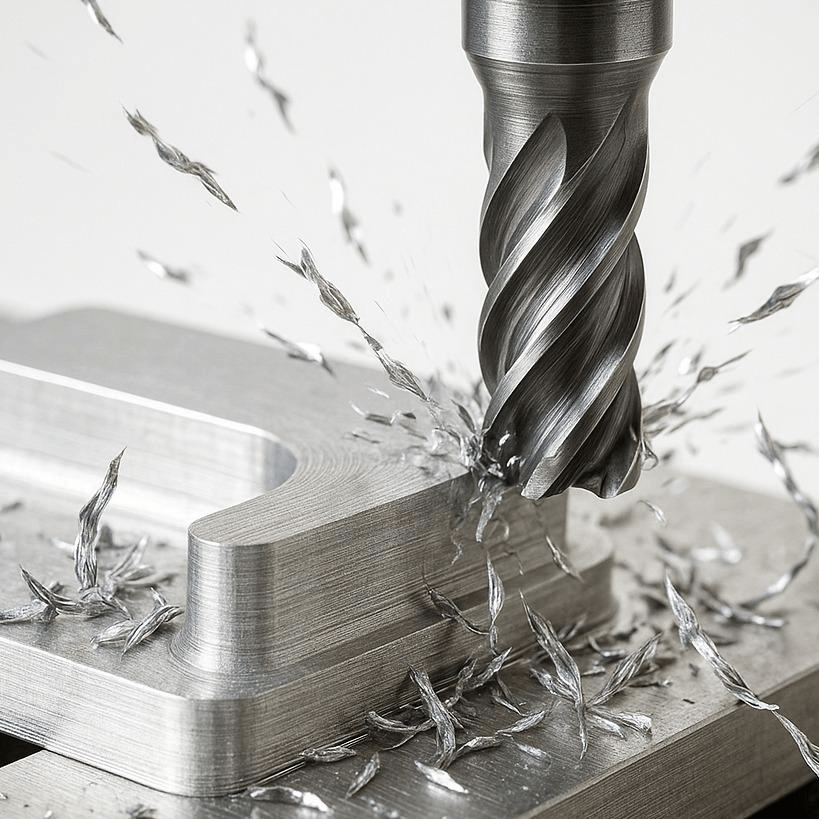
Milling is a widely used machining process in which a rotating cutter removes material from a workpiece to produce precise surfaces, slots, and complex shapes. However, the direction in which the milling cutter moves relative to the workpiece can significantly affect machining performance.
Two common milling methods are climb milling and conventional milling. Although both use rotating cutting tools, they differ in cutting direction, chip formation, cutting forces, and surface finish.
Understanding these differences helps machinists select the appropriate milling method, improve productivity, and achieve better machining results.
1. What Is Conventional Milling?
Conventional milling, also known as up milling, is a machining method in which the cutter rotates against the direction of the workpiece feed.
At the beginning of each cutting engagement, the cutting edge makes contact with the workpiece with a relatively small chip thickness. As the cutter continues rotating, the chip gradually becomes thicker until the cutting edge leaves the material.
This process creates several characteristics:
- Cutting begins with minimal chip thickness.
- Cutting forces tend to lift the workpiece.
- Friction can occur between the cutting edge and the workpiece.
- The method is relatively tolerant of certain machine backlash conditions.
Conventional milling is often used on older milling machines and in applications where machine rigidity or backlash control is limited.
2. What Is Climb Milling?
Climb milling, also called down milling, is a method in which the cutter rotates in the same general direction as the workpiece feed at the cutting point.
Unlike conventional milling, the cutting edge starts with a relatively thick chip and gradually reduces the chip thickness as it exits the workpiece.
Its main characteristics include:
- Cutting begins with maximum chip thickness.
- Cutting forces generally push the workpiece toward the machine table.
- Friction and rubbing can be reduced.
- Surface finish is often improved under suitable conditions.
- Tool wear may be reduced in many applications.
Climb milling is widely used in modern CNC machining because CNC machines generally provide better backlash control and machining stability.
3. Key Differences Between Climb and Conventional Milling
Understanding the differences between these two methods is important when planning machining operations.
Chip Thickness
In conventional milling, chip thickness increases from zero to its maximum value. In climb milling, it decreases from maximum to zero.
Cutting Forces
Conventional milling tends to generate an upward force on the workpiece, while climb milling generally produces a downward force that helps hold the workpiece against the table.
Surface Finish
Climb milling often produces a better surface finish because the cutting edge engages the material more directly and reduces rubbing.
Tool Wear
Climb milling can reduce friction-related wear under appropriate cutting conditions. However, actual tool life depends on workpiece material, cutter geometry, cutting parameters, and machine stability.
Machine Requirements
Climb milling requires a machine with effective backlash control. Conventional milling may be more suitable for older machines with mechanical clearance in the feed system.
4. When Should You Use Climb Milling?
Climb milling is commonly preferred in modern CNC machining and applications requiring good surface quality and machining efficiency.
Typical applications include:
- Finishing flat metal surfaces
- CNC machining of steel and aluminum components
- Producing accurate slots and profiles
- Machining components requiring consistent surface finishes
- High-productivity manufacturing operations
Because cutting forces generally push the workpiece downward, climb milling can also help improve workpiece stability when proper clamping is provided.
However, it is important to use suitable machine equipment and secure the workpiece correctly.
5. When Should You Use Conventional Milling?
Conventional milling remains useful in certain machining environments.
It may be preferred when:
- Working with older milling machines that have noticeable backlash
- Machining surfaces with scale or hard outer layers
- Performing certain roughing operations
- Working with setups where climb milling may create unstable cutting conditions
Because the cutting edge starts with minimal chip thickness, conventional milling may produce more rubbing at the beginning of each engagement.
The choice should depend on the machine condition, workpiece material, cutter type, and machining requirements.
6. How to Choose the Right Milling Cutter
Regardless of the milling direction, selecting a suitable cutter is essential for achieving reliable results.
Consider the following factors:
Workpiece Material: Aluminum, stainless steel, carbon steel, and cast iron have different cutting characteristics and require appropriate cutter designs.
Cutter Geometry: The number of flutes, helix angle, cutting edge design, and rake angle influence chip formation and cutting performance.
Tool Material: HSS cutters are suitable for many general-purpose applications, while solid carbide cutters are commonly used for higher-speed CNC machining.
Coating: TiN, TiAlN, and AlTiN coatings can improve wear resistance and thermal performance under suitable cutting conditions.
Machine Stability: Machine rigidity, spindle condition, tool holder quality, and workpiece clamping all influence the effectiveness of the milling operation.
7. Practical Tips for Better Milling Performance
To achieve stable machining results, operators should follow several important practices:
- Secure the workpiece firmly before machining.
- Select suitable spindle speeds and feed rates.
- Use the correct cutter diameter and flute configuration.
- Minimize unnecessary tool overhang.
- Ensure effective chip evacuation.
- Apply appropriate coolant or lubrication when required.
- Inspect cutting edges regularly for wear and damage.
Proper machining conditions help reduce vibration, improve surface quality, and extend cutter service life.
Conclusion
Climb milling and conventional milling are two important machining methods, each offering different advantages depending on the application.
Climb milling is often preferred for modern CNC machining because of its favorable cutting forces and surface finish. Conventional milling remains useful when machine backlash or specific workpiece conditions make it more suitable.
Understanding both methods allows manufacturers to optimize machining strategies and select appropriate cutting tools.
TAPMEC supplies milling cutters for international distributors, wholesalers, and industrial customers. We offer various tool specifications and material options to support different metalworking requirements.
Contact TAPMEC to discuss your milling cutter requirements and explore suitable product solutions.


