
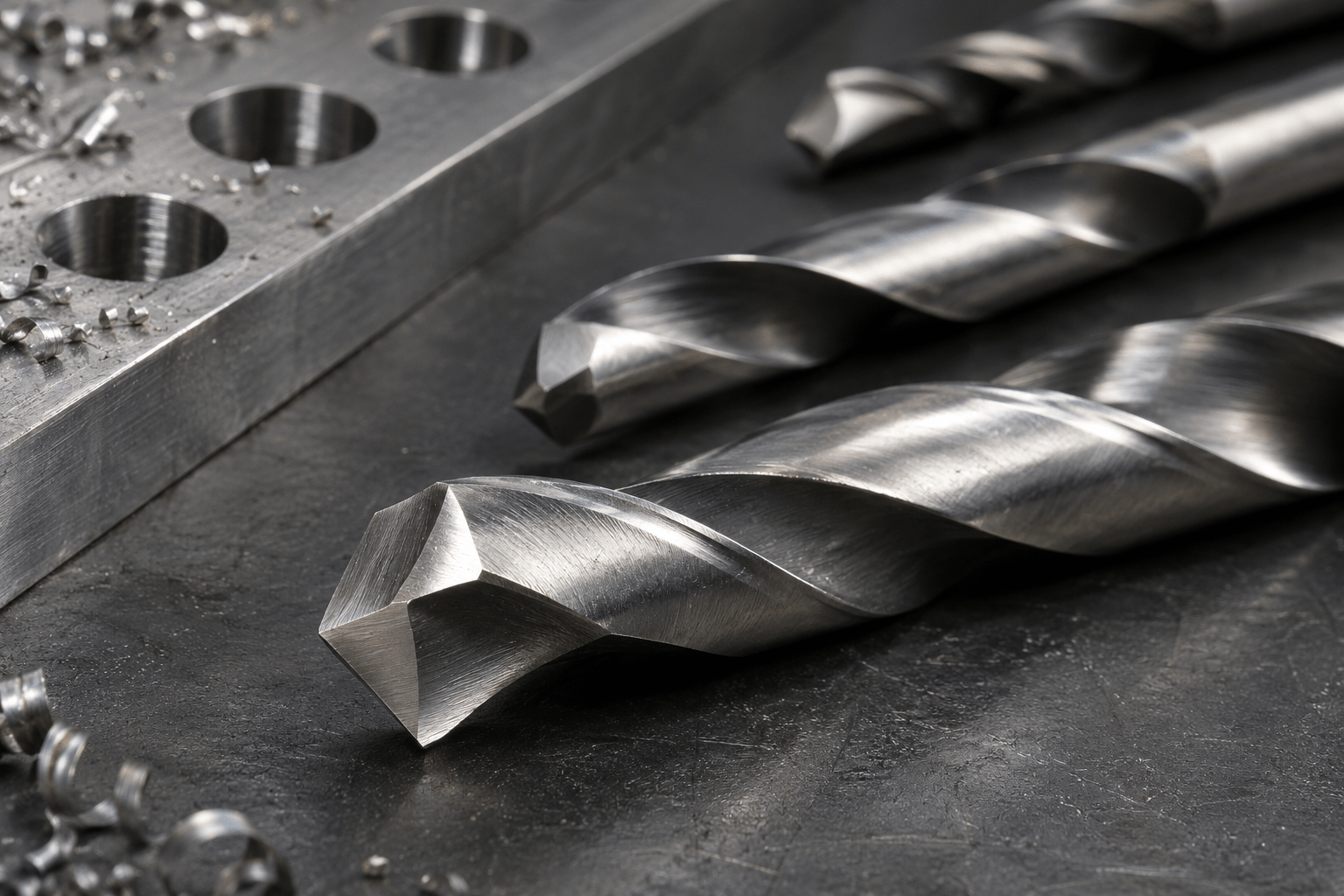
A drill bit may look like a simple cutting tool, but its geometry plays an important role in drilling performance. The shape of the drill point, the angle of the cutting edges, and the design of the flutes all influence how efficiently a drill bit removes material.
Different drilling applications require different geometric designs. Selecting a suitable drill bit geometry can help improve hole accuracy, reduce cutting resistance, and extend tool life.
In this guide, we will explore the main structural features of twist drill bits and explain how their geometry affects drilling performance.
1. Understanding the Basic Structure of a Twist Drill Bit
A standard twist drill bit consists of several important sections, each performing a specific function.
Shank: The shank is the part held by the drill chuck or machine tool. Common designs include straight shanks and reduced shanks.
Body: The body is the main working section of the drill bit. It contains the flutes and cutting edges.
Flutes: These spiral grooves provide space for chip removal and help transport chips away from the cutting area.
Cutting Lips: The cutting lips are the primary cutting edges located at the drill point. They remove material as the drill rotates.
Drill Point: The point is the front end of the drill bit. Its geometry determines how the tool enters the workpiece and begins cutting.
Understanding these components helps users identify the differences between drill bit designs and their intended applications.
2. Why Is Drill Point Angle Important?
The point angle is one of the most important geometric features of a drill bit. It refers to the included angle formed between the two main cutting lips.
Different point angles are suitable for different materials and drilling conditions.
118-Degree Point Angle
A 118-degree point angle is commonly used for general-purpose drilling.
It is widely found on conventional HSS twist drill bits and is suitable for many applications involving mild steel, aluminum, and other common materials.
135-Degree Point Angle
A 135-degree point angle is frequently used for drilling harder materials and applications requiring improved cutting stability.
It is often combined with a split-point design to reduce walking during initial drilling.
Choosing the Right Point Angle
The correct point angle depends on workpiece material, drill bit geometry, and machining conditions.
A smaller point angle generally produces a sharper drill point, while a larger angle creates a stronger point structure.
The appropriate design should balance cutting performance, tool strength, and application requirements.
3. The Role of Flute Design
Flutes are the spiral grooves running along the body of a twist drill bit. They are essential for chip evacuation and cutting performance.
Standard Helical Flutes
Most conventional twist drill bits feature helical flutes. Their spiral design helps remove chips from the hole while providing cutting clearance.
The helix angle influences chip movement and cutting behavior.
High Helix Flutes
High helix designs have a larger spiral angle and can help improve chip evacuation when drilling certain soft and ductile materials.
They are particularly useful when long, continuous chips are produced.
Low Helix Flutes
Low helix designs provide a more rigid body structure and can be suitable for certain harder or more brittle materials.
However, chip evacuation requirements must always be considered when selecting flute geometry.
4. What Is a Split Point Drill Bit?
A split-point drill bit features an additional ground geometry at the drill tip.
Unlike conventional drill points, the split-point design reduces the width of the chisel edge and creates additional cutting edges near the center.
Its main advantages include:
- Reduced walking during initial drilling
- Improved positioning accuracy
- Reduced thrust requirements in suitable applications
- More stable entry into the workpiece
Split-point drill bits are commonly used in metalworking applications where accurate hole positioning is important.
They are particularly useful for drilling metal components without relying heavily on center punching.
5. How Drill Bit Geometry Affects Hole Quality
Drill bit geometry directly influences the quality of the finished hole.
Several factors should be considered:
Cutting Edge Symmetry: Unequal cutting lips may cause uneven cutting forces, oversized holes, and vibration.
Point Angle: An unsuitable point angle can affect cutting resistance, tool strength, and hole formation.
Flute Geometry: Poor chip evacuation may cause chip accumulation, excessive heat, and surface damage.
Web Thickness: The central web provides structural strength to the drill bit. Its thickness influences rigidity and cutting behavior.
Surface Finish: Correct cutting geometry helps maintain stable cutting conditions and can contribute to smoother hole surfaces.
For precision machining, consistent drill geometry is essential for maintaining dimensional accuracy across production batches.
6. How to Select Drill Bit Geometry for Different Applications
When choosing drill bits, consider the following factors:
- General Metalworking: Standard 118-degree twist drill bits are suitable for many everyday drilling operations.
- Stainless Steel: Suitable HSS-Co drill bits with appropriate point and flute geometry are commonly preferred.
- Soft and Ductile Materials: Higher helix designs can help improve chip evacuation.
- Precision Drilling: Split-point designs can improve initial positioning and reduce drill walking.
- High-Production Machining: Consistent geometry and suitable cutting parameters are important for maintaining productivity.
Drill bit material, coating, machine stability, and cutting conditions should also be considered alongside geometry.
Conclusion
Drill bit geometry is a key factor influencing drilling efficiency, hole quality, and tool performance. Understanding point angles, flute designs, split points, and cutting edges helps users make better tooling decisions for different machining applications.
Whether you need standard twist drill bits, split-point drills, or specialized drilling tools, selecting the right geometry is essential for achieving consistent results.
TAPMEC supplies drilling tools for international distributors, wholesalers, and industrial customers. We offer different drill bit specifications and material options to meet various machining requirements.
Contact TAPMEC to discuss your drilling tool requirements and explore suitable product solutions.


