
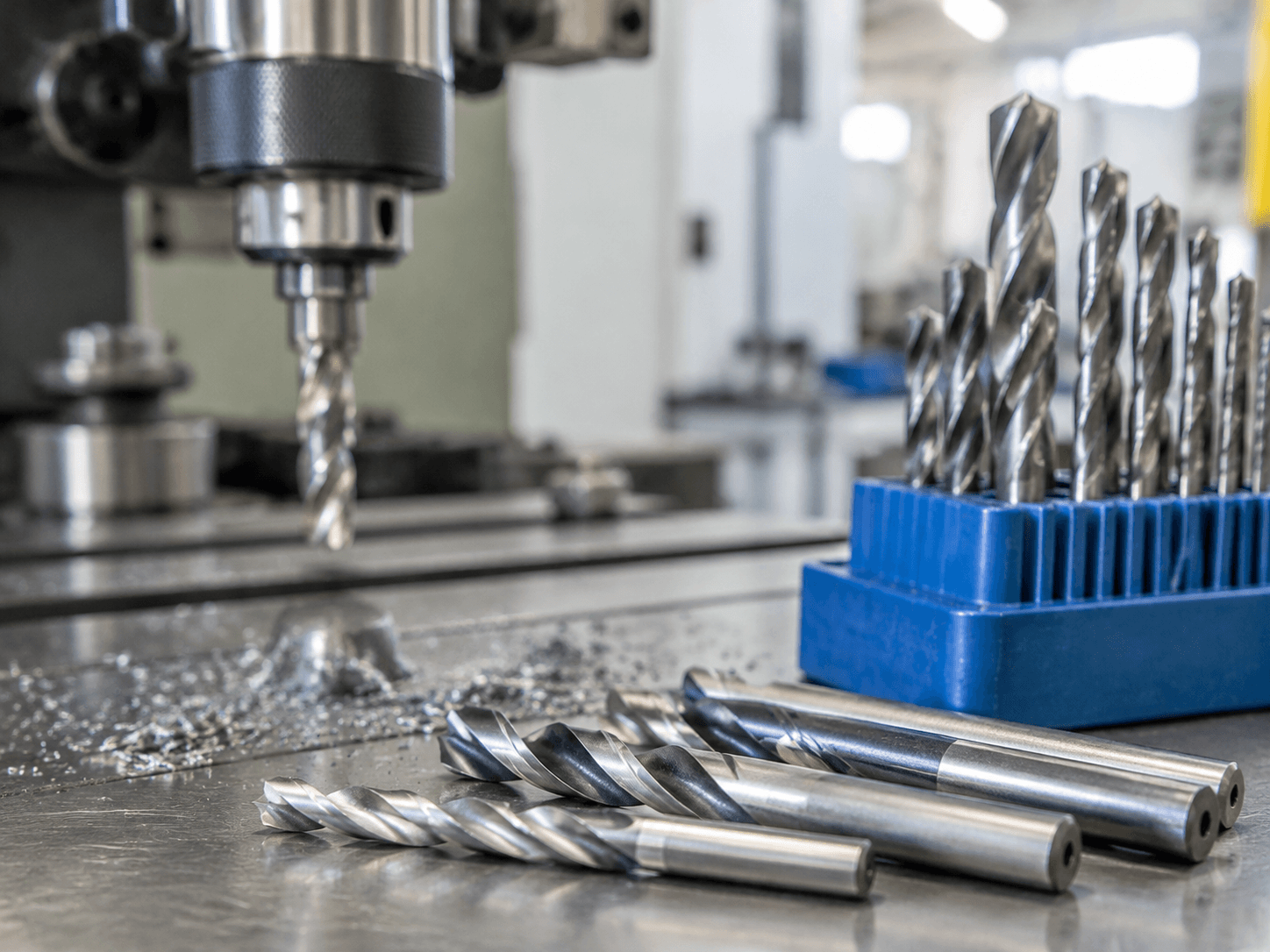
Drill bits are essential tools in metalworking, manufacturing, and industrial production. However, continuous drilling can gradually wear down cutting edges, reduce machining accuracy, and affect production efficiency.
Proper maintenance is important for extending drill bit service life and maintaining consistent drilling performance. Understanding common causes of tool wear, correct storage methods, and sharpening techniques can help users reduce replacement costs and improve productivity.
In this guide, we will explore practical ways to maintain drill bits and get better performance from your cutting tools.
1. Common Causes of Drill Bit Wear
Drill bits are exposed to friction, heat, and cutting forces during operation. Several factors can accelerate tool wear.
- Excessive Heat: High cutting speeds or insufficient cooling can generate excessive heat, reducing tool hardness and accelerating wear.
- Incorrect Feed Rate: Excessive feed pressure may damage cutting edges, while an unsuitable feed rate can affect drilling efficiency.
- Poor Chip Removal: Metal chips trapped in the flutes increase friction and may cause surface damage or tool breakage.
- Incorrect Tool Selection: Using an unsuitable drill bit for the workpiece material can lead to premature wear.
- Insufficient Lubrication: Poor lubrication increases friction between the cutting edges and the workpiece.
Identifying these problems early can help prevent unnecessary tool damage.
2. How to Maintain Drill Bits Properly
Regular maintenance helps preserve cutting performance and improve machining consistency.
Clean Drill Bits After Use
Remove metal chips, dust, and cutting fluid residue after drilling. Keeping the flutes and cutting edges clean helps prevent corrosion and allows easier inspection.
Check Cutting Edges Regularly
Inspect the cutting lips and drill point for chipping, cracks, and excessive wear. Damaged cutting edges may produce oversized or uneven holes.
Use Suitable Lubrication
For metal drilling applications, appropriate cutting oil or coolant can reduce friction and heat generation. The lubrication method should match the workpiece material and machining conditions.
Store Tools Correctly
Keep drill bits in dedicated tool cases or organized storage racks. Avoid placing them loosely together, as contact between cutting edges can cause damage.
Store tools in a clean, dry environment to reduce the risk of rust.
3. When Should Drill Bits Be Resharpened?
Drill bits do not always need to be replaced when their cutting performance decreases. Depending on the tool material and condition, resharpening may restore their cutting ability.
Common signs that a drill bit needs attention include:
- Increased cutting resistance during drilling
- Rough or uneven hole surfaces
- Excessive heat during normal operation
- Visible wear or rounding of cutting edges
- Increased noise or vibration
When resharpening, it is important to maintain the correct point angle, cutting lip geometry, and symmetry.
Improper sharpening can reduce drilling accuracy and cause uneven cutting forces. For high-precision applications, professional sharpening equipment is recommended.
4. Tips for Extending Drill Bit Service Life
A few practical operating habits can significantly improve tool durability.
- Select the correct drill bit material and diameter for each application.
- Follow recommended cutting speeds and feed rates.
- Secure the workpiece properly before drilling.
- Use suitable cutting fluid when required.
- Ensure effective chip evacuation, especially in deep-hole drilling.
- Avoid excessive pressure during operation.
- Inspect tools regularly and replace severely damaged drill bits.
Consistent operating practices help reduce premature wear and improve overall machining efficiency.
5. Why Drill Bit Quality Matters
The service life of a drill bit depends not only on how it is used but also on its manufacturing quality.
Important quality factors include material composition, heat treatment, cutting-edge geometry, dimensional accuracy, and surface finish.
For industrial buyers and distributors, selecting a reliable manufacturer is essential for maintaining consistent product performance across different batches.
A professional supplier should offer clear technical specifications, stable product quality, and suitable options for different drilling applications.
Conclusion
Proper drill bit maintenance plays an important role in improving drilling efficiency, reducing tool replacement costs, and maintaining consistent machining quality.
By cleaning tools regularly, inspecting cutting edges, using suitable lubrication, and following correct operating practices, users can extend drill bit service life and achieve more reliable results.
TAPMEC provides drilling tools for international distributors, wholesalers, and industrial customers. Contact us to explore our drill bit products and discuss your sourcing requirements.


