
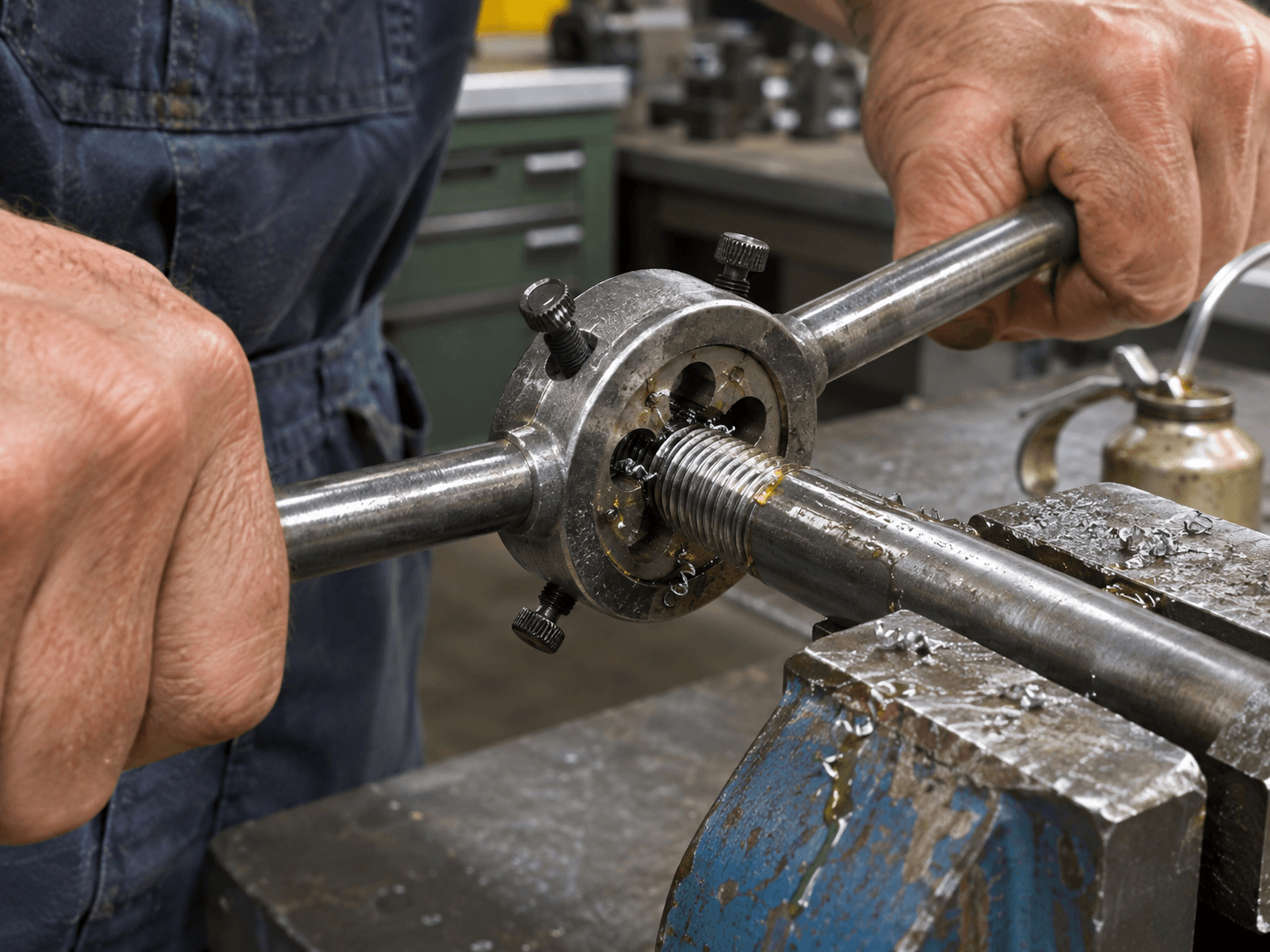
Cutting external threads is a common operation in metalworking, mechanical maintenance, and fastener manufacturing. Whether producing threaded rods, repairing damaged bolts, or preparing metal components for assembly, a threading die is a practical tool for creating accurate external threads.
However, achieving good thread quality requires more than simply rotating a die around a metal rod. Workpiece preparation, die installation, cutting direction, lubrication, and inspection all influence the final result.
In this guide, we will explain how to cut external threads with a threading die, discuss important machining considerations, and share practical techniques for achieving clean and consistent threads.
1. Preparing the Workpiece Before Threading
Proper preparation is the first step toward successful external thread cutting.
Before starting, check the following factors:
Check the Rod Diameter
The diameter of the workpiece must be suitable for the required thread specification. If the rod is too large, the die may require excessive cutting force. If it is too small, the finished thread may not achieve the required dimensions.
For example, an M10 × 1.5 thread has a nominal diameter of 10 mm and a pitch of 1.5 mm. The workpiece diameter should be selected according to the applicable machining requirements and tolerances.
Clean the Workpiece Surface
Remove rust, dirt, oil residue, and other contaminants from the area where threads will be produced.
A clean surface helps the cutting teeth engage properly and reduces the risk of uneven cutting.
Chamfer the Rod End
Creating a small chamfer at the end of the rod helps guide the threading die into position.
Without proper chamfering, the die may have difficulty starting the thread, especially when working with harder metal materials.
2. Selecting the Correct Threading Die
Choosing the correct die is essential for producing threads that fit properly with nuts, bolts, and other threaded components.
Several specifications should be confirmed before machining.
Thread Standard: Determine whether the required thread is Metric, UNC, UNF, BSP, or another standard.
Thread Size: Confirm the nominal diameter, such as M6, M8, M10, or 1/4-20 UNC.
Thread Pitch: Different thread sizes may have different pitches. Always check the required specification rather than relying on diameter alone.
Thread Direction: Most standard threads are right-hand threads, but some applications require left-hand threads.
Die Condition: Inspect the cutting teeth for damage, excessive wear, or rust before use.
Selecting a die that matches the workpiece and thread requirements helps avoid machining errors and unnecessary tool wear.
3. Step-by-Step Guide to Cutting External Threads
Once the workpiece and threading die are ready, the cutting process can begin.
Step 1: Install the Die Correctly
Place the threading die into a compatible die stock or holder. Make sure it is securely positioned and that its cutting side faces the correct direction.
For most conventional solid dies, the lead chamfer should face the end of the workpiece during initial cutting.
Step 2: Align the Die with the Workpiece
Position the die perpendicular to the rod. Proper alignment is particularly important during the first few turns because incorrect positioning can produce crooked threads.
Start slowly and apply even pressure to allow the cutting teeth to engage the material.
Step 3: Apply Cutting Lubricant
Use an appropriate cutting oil or lubricant based on the workpiece material.
Lubrication helps reduce friction, control heat generation, improve chip movement, and protect the cutting edges.
Step 4: Rotate the Die Gradually
Turn the die in the correct direction while maintaining stable alignment.
For manual threading, a common practice is to rotate forward and periodically reverse slightly when appropriate to break chips and release cutting resistance.
Avoid applying excessive force. If the die becomes difficult to turn, stop and check for chip accumulation, misalignment, or an unsuitable workpiece diameter.
Step 5: Complete the Required Thread Length
Continue cutting until the desired thread length is achieved.
Maintain consistent pressure and avoid unnecessary interruptions that could affect the thread surface.
Step 6: Remove the Die and Inspect the Thread
Carefully remove the die and clean the finished threads.
Check the thread profile, dimensions, and surface condition. A suitable thread gauge or matching nut can be used to verify whether the thread meets the required specifications.
4. How to Achieve Better Thread Quality
Good external threads should have a consistent profile, clean surfaces, and proper dimensional accuracy.
The following factors can significantly influence machining results.
Maintain Proper Alignment
Incorrect alignment during initial cutting is a common cause of crooked threads. A suitable die holder can improve stability and control.
Use the Right Cutting Speed
When using machine-assisted threading equipment, select a suitable cutting speed according to the workpiece material, die specification, and equipment requirements.
Excessive speed may increase heat and accelerate tool wear.
Choose Suitable Lubrication
Different materials require different lubrication conditions. Proper cutting oil helps maintain smoother cutting and reduces friction.
Avoid Excessive Cutting Pressure
Forcing the die through the workpiece may damage cutting teeth or produce poor thread surfaces. Allow the cutting edges to remove material gradually.
Inspect Tools Regularly
Worn or damaged cutting edges can result in inaccurate threads and poor surface finishes. Regular inspection helps identify problems before they affect production quality.
5. Manual Threading vs. Machine Threading
External threads can be produced using manual or machine-assisted methods.
Manual Threading
Manual threading uses a die stock to rotate the die around the workpiece.
Its main advantages include:
- Simple operation and equipment requirements
- Low initial investment
- Flexibility for maintenance and repair
- Practical for small-batch production
It is particularly suitable for workshops, field maintenance, and applications where portability is important.
Machine Threading
Machine-assisted threading uses compatible equipment to control the cutting process.
Depending on the machine and tooling configuration, it can offer more consistent operation and improved productivity.
Machine threading is generally more suitable for repeated production tasks where process stability and efficiency are important.
The appropriate method depends on production volume, equipment availability, thread requirements, and operating conditions.
6. Common Mistakes to Avoid
Even experienced operators may encounter problems during external thread cutting.
Here are several mistakes worth avoiding:
- Using an incorrect rod diameter for the required thread.
- Selecting a die with the wrong thread pitch or standard.
- Starting the cutting process without proper chamfering.
- Holding the die at an angle during initial engagement.
- Ignoring lubrication requirements.
- Continuing to cut with worn or damaged tools.
- Failing to inspect the finished thread.
Paying attention to these details can help reduce machining errors, improve product consistency, and extend tool service life.
Conclusion
Cutting external threads with a threading die is a practical process used in metalworking, mechanical maintenance, and industrial manufacturing. Proper workpiece preparation, correct die selection, accurate alignment, and suitable lubrication are essential for achieving reliable results.
Whether you are producing new threaded components or repairing existing threads, understanding the correct operating procedures can help improve machining efficiency and thread quality.
TAPMEC supplies threading tools for international distributors, wholesalers, and industrial customers. We support various thread specifications and flexible purchasing requirements.
Contact TAPMEC to learn more about our threading dies and other metalworking tools.


