
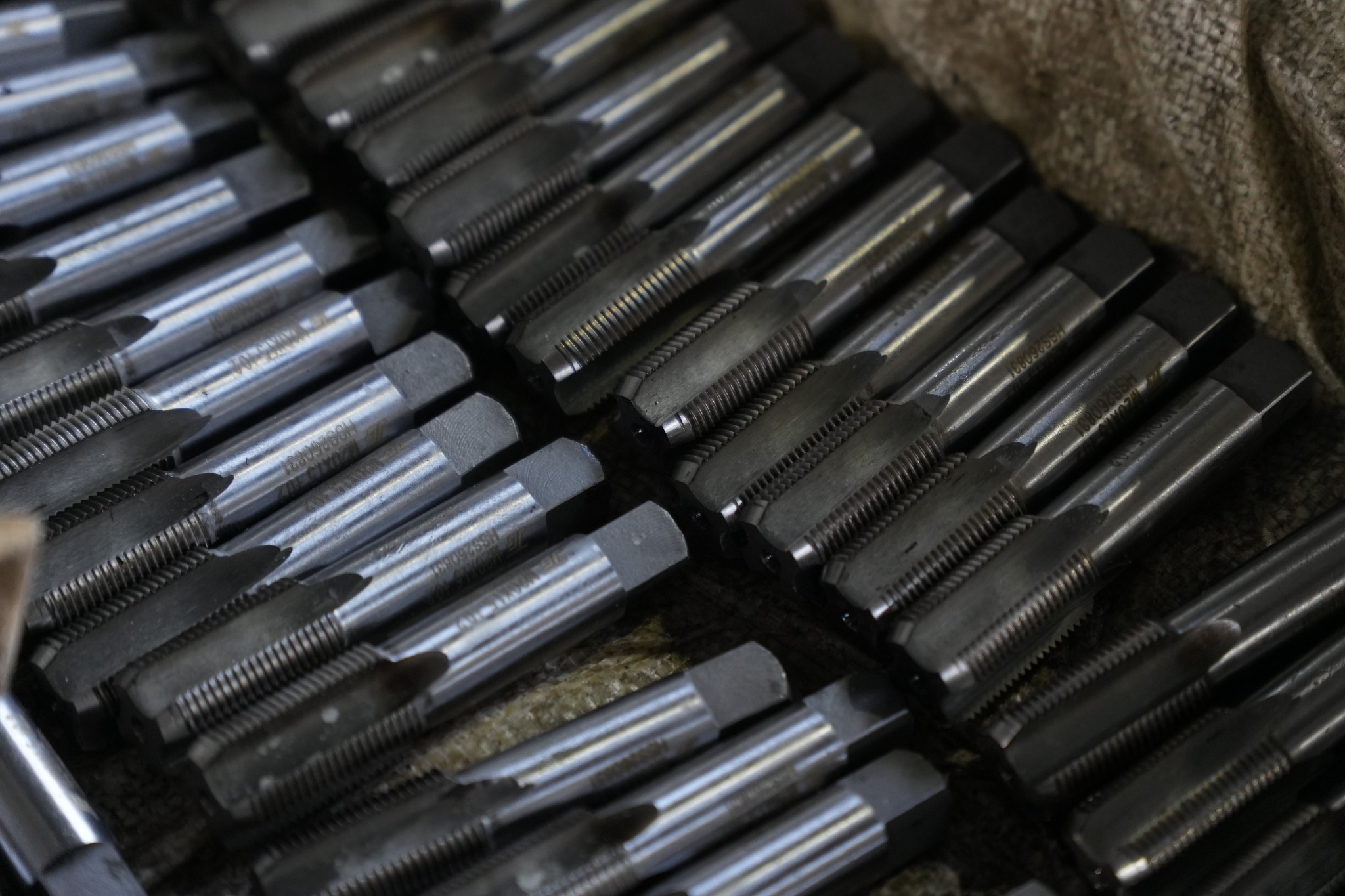
Taps are among the most widely used tools for producing internal threads in metal and other machinable materials. From small electronic parts to large industrial equipment, threaded holes are required wherever bolts, screws, fittings, sensors, fasteners, or mechanical components must be assembled securely.
A tap cuts or forms the internal thread inside a previously prepared hole. Different tap designs are used according to the workpiece material, hole type, thread standard, production volume, and machine conditions.
This article explains the main application scenarios for taps and how manufacturers select suitable tap types for different industries.
1. General Mechanical Manufacturing
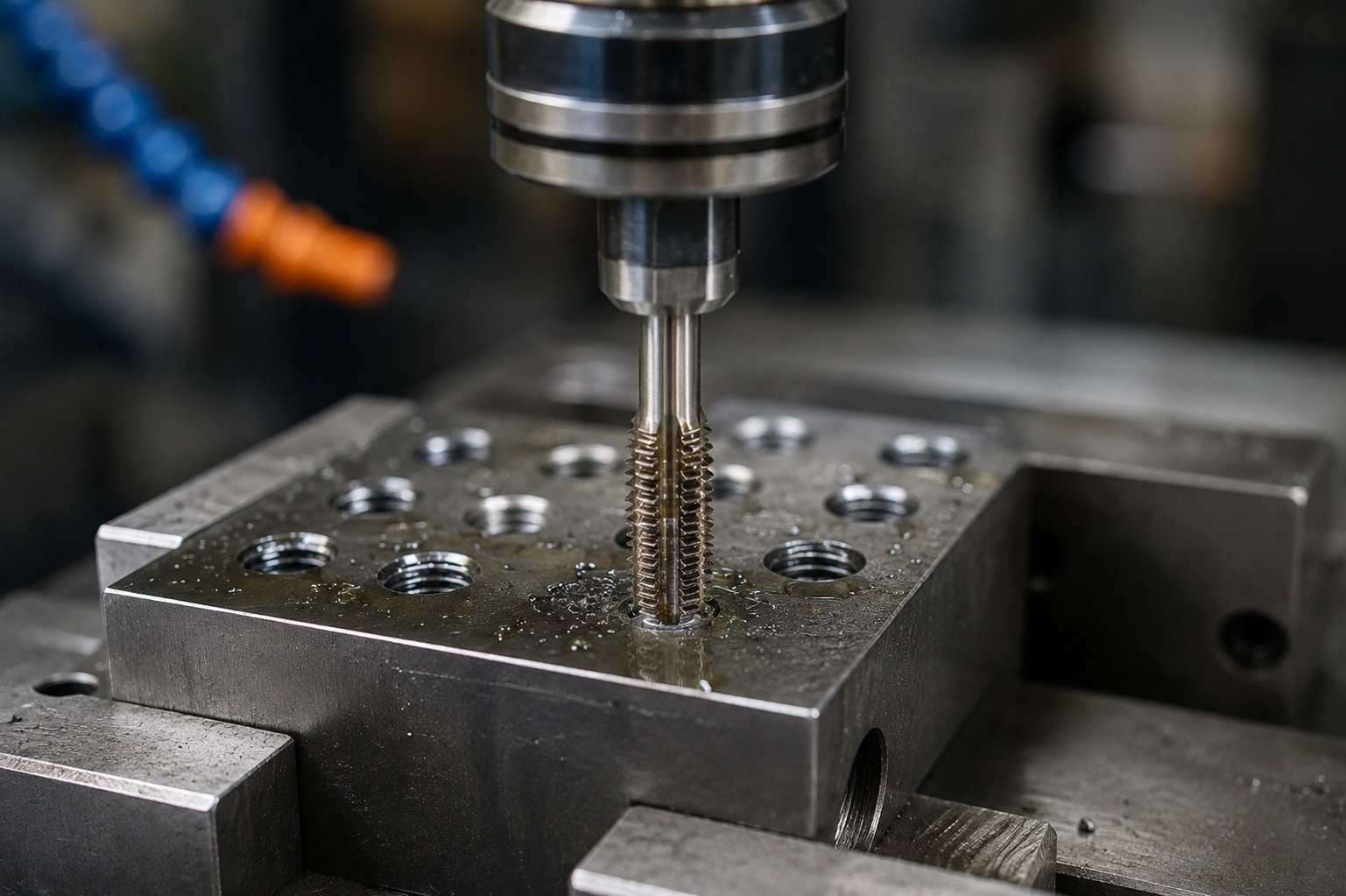
General mechanical manufacturing is one of the largest application areas for taps.
Machine frames, brackets, housings, plates, fixtures, and structural components frequently require threaded holes for assembly, mounting, and adjustment.
Hand taps are suitable for maintenance or low-volume work, while CNC machines and dedicated tapping equipment normally use machine taps for repetitive production.
2. Automotive Manufacturing
Automotive production requires a very large number of internal threads.
Engines, transmissions, braking systems, suspension components, battery systems, housings, brackets, and body structures all contain threaded holes.
Machine taps are commonly used because automotive production emphasizes productivity and repeatability. Spiral point taps may be used for through holes, while spiral flute taps are often selected for blind holes.
Thread-forming taps are also widely used for suitable ductile materials because they produce no cutting chips and can provide strong threads in high-volume production.
3. Aerospace Components
Aerospace manufacturing requires reliable threaded connections in components such as structural parts, engine assemblies, hydraulic systems, landing gear, and equipment housings.
Materials may include aluminum alloys, titanium alloys, stainless steels, and high-strength heat-resistant materials. These materials can be more difficult to tap than ordinary carbon steel.
Tap geometry, substrate material, coating, cutting speed, lubrication, and hole preparation must therefore be selected carefully. Accurate thread tolerances and stable tool life are especially important because aerospace components often have strict quality-control requirements.
4. Machinery and Industrial Equipment
Heavy machinery, construction equipment, agricultural machinery, mining equipment, and industrial production systems all require internal threads.
Large housings, gearboxes, pumps, hydraulic components, machine bases, and structural parts may contain many threaded holes of different sizes.
Standard HSS or HSS-Co taps are commonly used for general applications, while larger or special threads may require custom taps or replaceable-blade tap systems.
For repair and maintenance work, hand taps are also important because damaged threads may need to be restored directly on installed equipment.
5. Mold and Die Manufacturing
Molds and dies contain numerous threaded holes for assembly, inserts, guide components, cooling systems, lifting points, and maintenance.
The workpiece materials are often tool steels that may have relatively high hardness or alloy content. This makes tap selection more demanding.
High-quality machine taps, HSS-Co taps, or carbide taps may be selected according to the material condition. Accurate pre-drilled hole size and good alignment are important because a broken tap inside an expensive mold can cause significant production delays.
6. Electronics and Precision Components
Taps are also used extensively in electronics, electrical equipment, instruments, and precision mechanical products.
Small threaded holes are common in:
- Electronic housings
- Connector components
- Sensor assemblies
- Small motors
- Optical equipment
- Precision brackets
- Consumer electronics
These applications may involve very small thread sizes. Micro taps require careful handling because they are more sensitive to excessive torque, misalignment, and chip accumulation. Precision tapping systems are often used to maintain stable feed and alignment.
7. Plumbing, Valves, and Pipe Fittings
Pipe systems require internal threads for connecting valves, fittings, pressure components, and fluid-handling equipment.
Pipe taps are designed for thread forms such as NPT or other national and international pipe-thread standards.
Unlike ordinary parallel machine threads, many pipe threads are tapered to create a mechanical and sealing relationship between mating components.
These taps are commonly used in industries such as plumbing, oil and gas, chemical processing, water treatment, compressed air systems, and industrial fluid control.
8. Energy and Power Equipment
Power-generation and energy industries use taps in a wide variety of components.
Examples include turbine parts, generator housings, electrical equipment, wind-energy systems, pumps, valves, and energy-storage equipment.
Thread sizes can range from small fastener holes to large industrial connections. In demanding materials, manufacturers focus on tool life, coating selection, lubrication, and process stability.
9. Construction and Structural Components
Threaded holes are also common in construction-related manufacturing.
Steel structures, fastening plates, rail systems, prefabricated assemblies, lifting components, and building-service equipment may require tapping.
For larger steel parts, radial drills, machining centers, or portable tapping equipment may be used. The tap must match material strength, thread depth, and production conditions.
10. Maintenance and Repair
Taps are not limited to new production.
Maintenance workshops use taps to repair damaged or contaminated internal threads in machinery, vehicles, tools, and industrial equipment.
Hand taps are particularly useful because they can be operated without a CNC machine and can reach locations where large equipment cannot be installed.
A maintenance technician may use a tap to clean corrosion, restore a damaged thread, deepen an existing thread, or create a replacement threaded hole.
However, badly damaged threads may require thread inserts or other repair methods rather than simple retapping.
11. Through Holes and Blind Holes
One of the most important application differences is whether the hole passes completely through the workpiece.
For through holes, spiral point taps are often suitable because their cutting geometry pushes chips forward and out of the opposite side.
For blind holes, spiral flute taps are commonly used because they pull chips backward toward the hole entrance.
Straight flute taps can also be used in many applications, particularly with short-chipping materials or manual tapping, but chip management must always be considered.
Correct selection reduces chip packing, excessive torque, and tap breakage.
12. Different Workpiece Materials
Tap applications also vary according to material.
Carbon steel is common in general manufacturing and can be machined with many standard machine taps.
Stainless steel requires more careful control because it can work-harden and produce long, difficult chips.
Aluminum alloys may require polished flutes and suitable geometry to reduce material adhesion.
Cast iron usually produces shorter chips and may use straight flute designs.
High-strength and heat-resistant alloys may require HSS-Co, powder metallurgy HSS, carbide, or specialized coatings.
The tap should therefore be selected according to the actual workpiece rather than thread size alone.
13. Manual, CNC, and Automated Tapping
Taps are used across very different production environments.
Manual tapping is suitable for repair, prototyping, and low-volume production.
Drilling machines and tapping machines provide greater speed for workshop production.
CNC machining centers and lathes can perform synchronized tapping automatically as part of a complete machining cycle.
Automated production lines require the highest level of process consistency because a single broken tap can interrupt the entire production system.
Conclusion
Taps are used wherever reliable internal threads are required, making them essential tools in automotive, aerospace, machinery, electronics, mold manufacturing, energy, construction, plumbing, and maintenance industries.
The correct tap depends on much more than thread size. Manufacturers must consider hole type, workpiece material, thread standard, production volume, machine type, chip direction, lubrication, tolerance, and required tool life.
Spiral point taps are often suitable for through holes, spiral flute taps for blind holes, forming taps for suitable ductile materials, and hand taps for repair or low-volume work.
By matching the tap design to the actual application, manufacturers can improve thread quality, reduce tool breakage, increase productivity, and achieve more consistent internal threading performance.


