
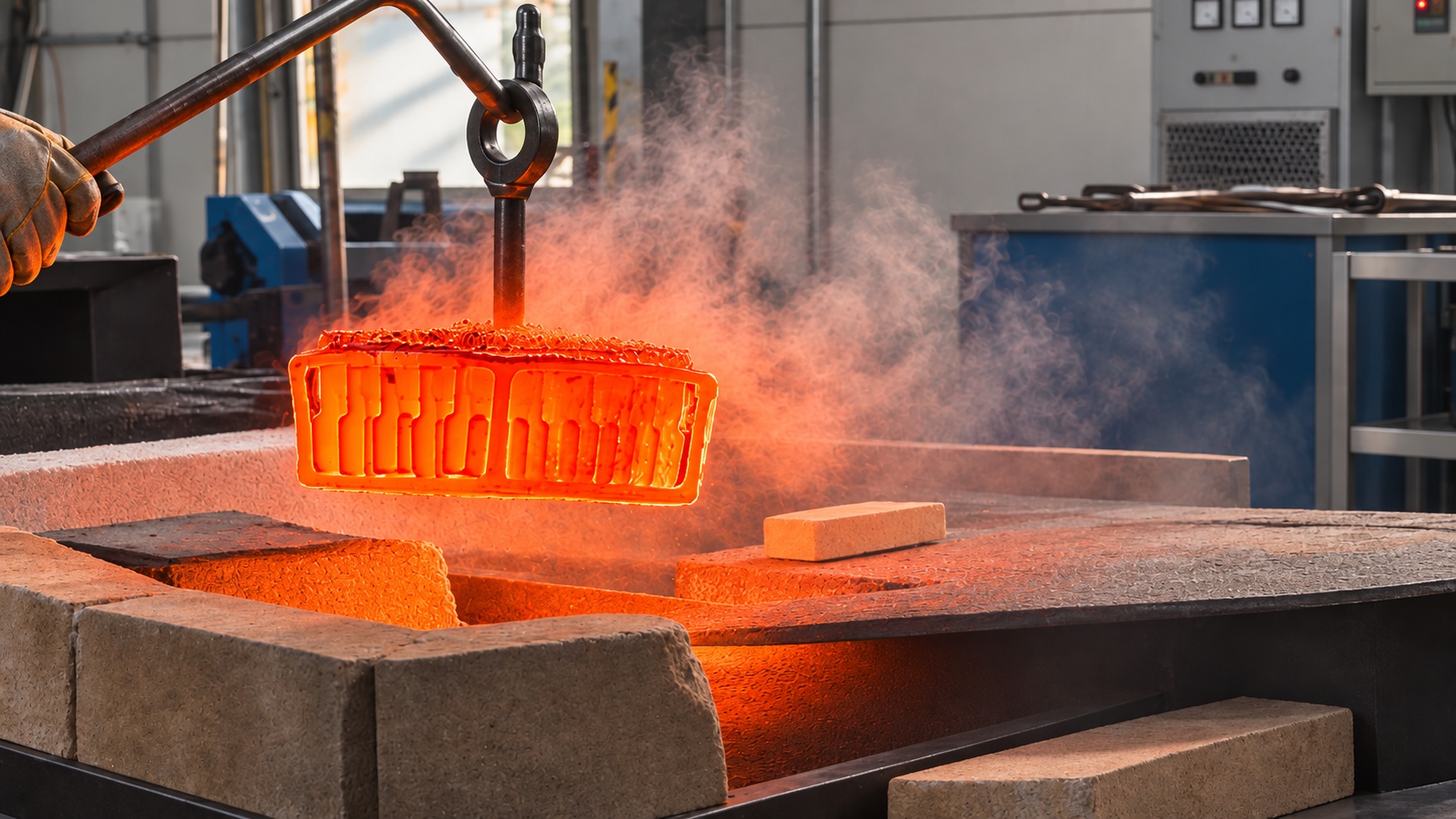
In the manufacturing of thread taps, machining accuracy is only one part of the production process. A tap may be shaped correctly, ground to precise dimensions, and manufactured from suitable tool steel, but without proper heat treatment, it may still fail quickly during actual cutting.
Among the most important stages of heat treatment is quenching. This process directly affects the hardness, wear resistance, strength, and service life of the finished tap. For manufacturers producing hand taps and machine taps, reliable quenching equipment is therefore an essential part of maintaining stable product quality.
What Is Quenching in Tap Manufacturing?
Quenching is a heat treatment process in which steel tools are heated to a specific temperature and then cooled under controlled conditions.
For taps, the objective is to change the internal structure of the steel so that the cutting tool achieves the hardness required for threading operations.
The process generally includes several stages:
- Controlled heating
- Temperature holding
- Rapid or controlled cooling
- Tempering after quenching
- Final hardness inspection
Each stage must be carefully controlled because excessive heating, uneven temperatures, or incorrect cooling can affect the final tap.
A properly treated tap needs sufficient hardness to resist cutting-edge wear while maintaining enough toughness to reduce the risk of breakage.
Why Quenching Equipment Matters
Modern quenching equipment is designed to provide more stable temperature control than traditional heat treatment methods.
During tap production, temperature consistency is especially important. If different areas of the same batch are exposed to different temperatures, the resulting hardness may not be uniform.
This can create several problems, including:
- Uneven cutting performance
- Premature tooth wear
- Increased risk of tap breakage
- Distortion of the tool body
- Inconsistent product quality between batches
Professional heat treatment equipment helps manufacturers control these variables more accurately.
The goal is not simply to make the tap as hard as possible. Excessive hardness may reduce toughness and make the tap more brittle. Instead, the heat treatment process must achieve a practical balance between hardness, wear resistance, and mechanical strength.
Temperature Control During Quenching
Temperature control is one of the most critical functions of quenching equipment.
Different tool steels require different heating temperatures and holding times. The exact parameters depend on factors such as steel composition, tap size, application, and required hardness.
During production, the furnace must maintain a stable temperature throughout the heating chamber.
A well-controlled system helps reduce temperature fluctuations and ensures that taps within the same batch receive similar heat treatment conditions.
This consistency is particularly important for mass production, where manufacturers need to maintain similar mechanical properties across hundreds or thousands of tools.
Automated temperature monitoring also allows operators to follow predefined heat treatment programs instead of relying entirely on manual control.
Controlling Oxidation and Surface Quality
Another important consideration during heat treatment is surface oxidation.
When steel is exposed to high temperatures in uncontrolled atmospheric conditions, oxidation and decarburization may occur. These changes can affect the surface condition and potentially influence the cutting performance of the finished tap.
Depending on the production process, manufacturers may use controlled-atmosphere furnaces, vacuum heat treatment systems, or other protective methods to reduce these effects.
Maintaining a cleaner surface after heat treatment can also make later finishing processes more efficient.
After quenching and tempering, taps may continue through grinding, surface treatment, coating, inspection, or packaging depending on the final product specification.
Quenching and Tap Hardness
Hardness is one of the most important characteristics of a cutting tap.
During threading, the cutting edges repeatedly contact the workpiece material under significant pressure. If the tap is too soft, the teeth may wear rapidly. If it is excessively hard without sufficient toughness, the tool may become more sensitive to impact or improper operating conditions.
Quenching followed by tempering allows manufacturers to adjust these properties.
After heat treatment, hardness testing equipment is commonly used to verify whether the taps meet the required production specification.
These inspections are an important part of quality control because visual inspection alone cannot determine whether the internal mechanical properties of the steel are correct.
Reducing Distortion During Heat Treatment
Taps have relatively complex geometries. Their flutes, cutting teeth, shanks, and threaded sections must maintain dimensional stability throughout production.
Heat treatment can create internal stress, which may cause bending or deformation if the process is not properly controlled.
Modern quenching systems help reduce this risk by controlling heating speed, holding temperature, cooling conditions, and material handling.
After heat treatment, manufacturers may also conduct dimensional inspections to confirm straightness and other critical specifications before the taps move into subsequent production stages.
Stable heat treatment therefore contributes not only to hardness but also to dimensional consistency.
The Role of Tempering After Quenching
Quenching is normally followed by tempering.
Immediately after quenching, the steel may have high hardness but also contain significant internal stress. Tempering involves reheating the tool to a lower controlled temperature to improve toughness and stabilize the material structure.
The combination of quenching and tempering helps create a more practical balance between cutting performance and tool durability.
For thread taps used in daily machining, this balance is particularly important because the tool must withstand repeated cutting loads while maintaining the geometry of the cutting teeth.
Heat Treatment as Part of Quality Control
Reliable tap manufacturing depends on controlling every production stage, from raw material selection and machining to heat treatment, grinding, inspection, and packaging.
Quenching equipment plays a central role in this system.
Stable heat treatment helps manufacturers achieve more consistent hardness, better wear resistance, reduced deformation, and more predictable cutting performance.
At Tapmec, heat treatment is treated as an important production step rather than simply a finishing process. By controlling key manufacturing parameters and inspecting finished taps before shipment, we aim to provide practical and reliable threading tools for distributors, workshops, and industrial users.
For buyers sourcing taps from China, understanding the manufacturer's heat treatment process can therefore be just as important as comparing dimensions, materials, or prices. A stable quenching process is one of the foundations behind consistent tap performance.


