
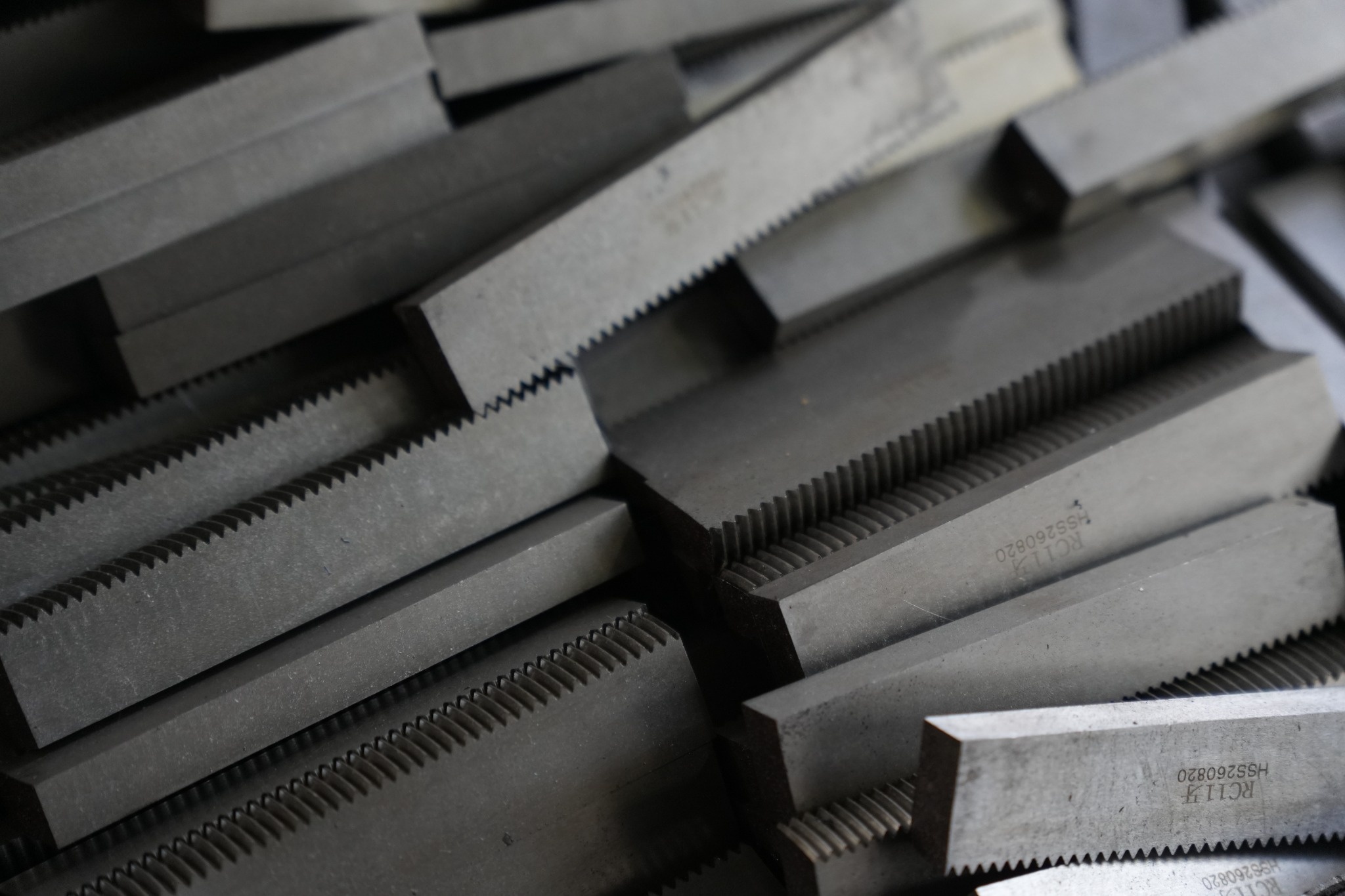
In industrial threading, not every tap is manufactured as a single solid cutting tool. For certain large-diameter, special-purpose, or high-volume applications, manufacturers may use a tap body fitted with replaceable cutting blades. These blades are often called tap inserts, chaser blades, or replaceable chasers, depending on the tool design and regional terminology.
Unlike a conventional solid tap, where the cutting teeth, flutes, shank, and body are made as one tool, an inserted tap separates the cutting element from the supporting body. When the cutting edge becomes worn or damaged, the blade can be replaced while the main tap body continues to be used.
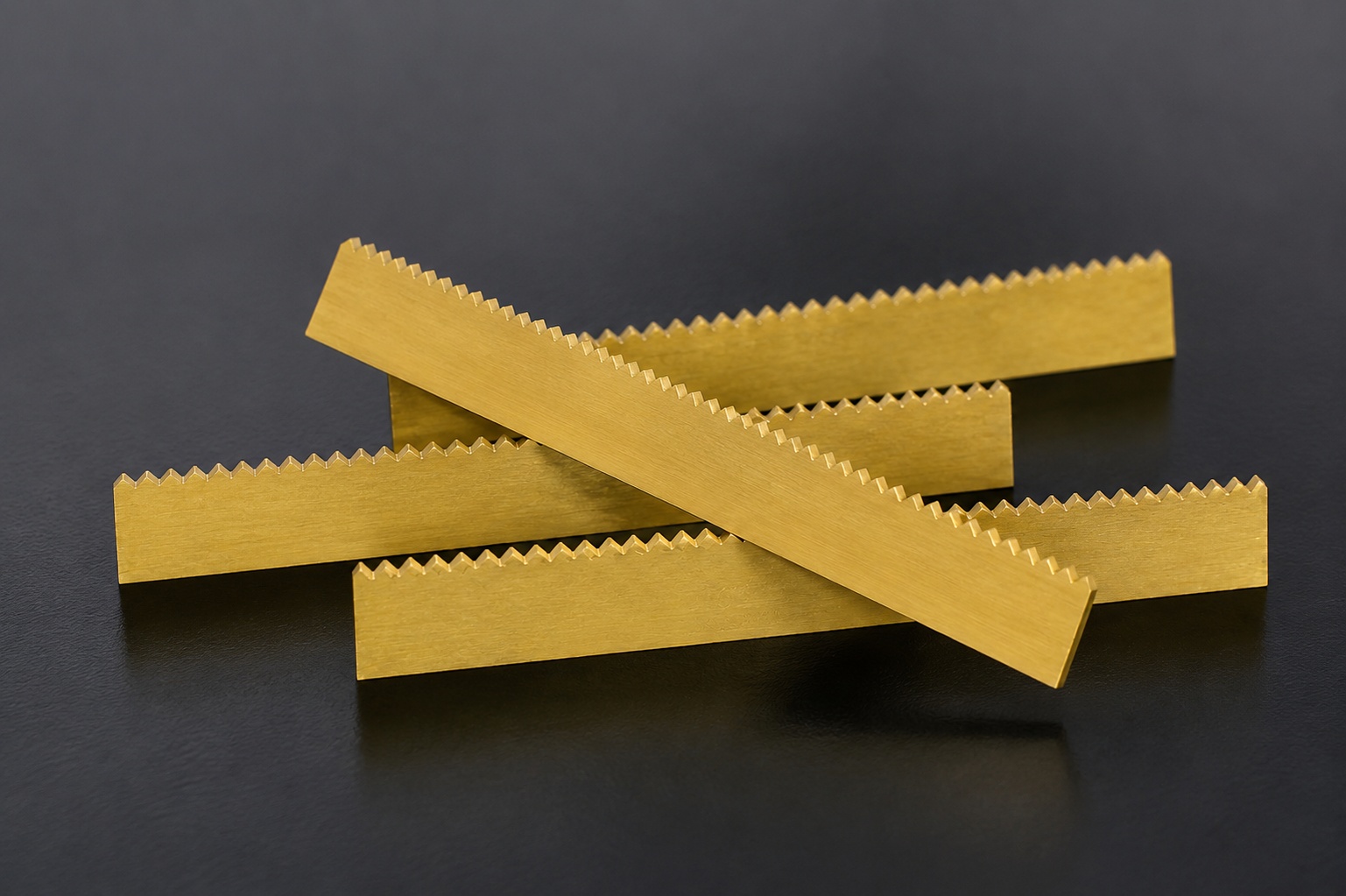
1. What Is a Replaceable Tap Insert?
A replaceable tap insert is a detachable cutting component mounted on a tap body.
The insert contains the thread-forming cutting teeth that contact the workpiece and remove material during tapping. The tap body provides rigidity, alignment, torque transmission, and support for the insert.
A typical inserted tap system includes:
Tap body → Insert seats → Replaceable blades → Clamping or locking components
This modular structure allows the cutting parts and supporting body to be manufactured and maintained separately.
2. How Inserted Taps Differ from Solid Taps
A solid tap is manufactured from one continuous piece of tool material. Once its cutting edges are severely worn, the entire tool may need to be reground or replaced.
An inserted tap works differently. The body is designed for repeated use, while the cutting inserts are replaceable wear components. When an insert reaches the end of its service life, the operator can remove it and install a new one.
This can reduce the amount of expensive cutting-tool material that must be discarded, especially for large taps where a solid high-speed steel or carbide body would be costly.
3. Structure of a Tap Insert
Although designs vary, a tap insert generally contains several functional features.
The most important are the cutting teeth, which reproduce the required thread profile. The blade may also include relief behind the cutting edge, chip-control geometry, locating surfaces, and clamping areas.
The insert must fit accurately against the seat in the tap body. Any movement during cutting can affect thread size, runout, and tool life.
4. Materials Used for Tap Inserts
Tap inserts can be made from different cutting-tool materials depending on the workpiece and application.
Common choices may include:
- High-speed steel
- Cobalt-alloyed high-speed steel
- Powder metallurgy high-speed steel
- Carbide for selected applications
HSS and HSS-Co provide a useful combination of toughness and wear resistance. Carbide can provide higher hardness and wear resistance but is less tolerant of impact, vibration, or poor alignment.
Replaceable blades may also receive PVD coatings such as TiN, TiCN, or TiAlN to increase surface hardness, reduce friction, and improve wear resistance.
5. Why Replaceable Inserts Are Useful for Large Threads
The economic advantage of an inserted tap becomes more significant as tool diameter increases.
A large solid tap requires a substantial amount of expensive tool steel and more machining time. If the cutting teeth become damaged, replacing the entire tool can be costly.
With an inserted design, the tap body can be reused while high-performance cutting material is concentrated only where it is needed. When the blades wear, only the inserts are replaced.
This can lower long-term tooling cost in suitable applications and reduce material waste.
6. Thread Accuracy and Insert Positioning
Replaceable inserts must be positioned very accurately.
If one blade projects farther than the others, it may carry excessive cutting load. If a blade sits too far inward, it may not cut correctly.
Poor positioning can cause:
- Uneven tooth loading
- Incorrect thread diameter
- Increased runout
- Poor surface finish
- Premature insert failure
- Unstable tapping torque
The body, insert seats, and clamping system must therefore work together as a precision assembly.
After blade replacement, some systems may require dimensional checking or adjustment before the tap returns to production.
7. Cutting Geometry and Relief
The cutting geometry of the insert determines how it enters and cuts the workpiece.
Important features include the thread profile, rake geometry, relief angle, chamfer, and cutting-edge condition.
Relief behind the cutting edge reduces rubbing between the blade and the newly generated thread surface. Too little relief can increase friction and torque, while excessive relief can weaken the cutting edge.
The chamfer distributes the cutting load across several teeth and influences how smoothly the tool starts the thread.
These features must be ground consistently across all inserts used in one tap body.
8. Chip Evacuation
Chip control is critical in any tapping operation.
Inserted taps must provide enough space for chips to leave the cutting area without becoming trapped between the blade, body, and workpiece.
The tool design may include chip spaces or flutes between the replaceable blades. The exact arrangement depends on tap diameter, hole type, workpiece material, and cutting method.
Poor chip evacuation can increase torque and may cause edge chipping or tool breakage. Suitable cutting fluid and correct machining parameters remain important.
9. Installation and Maintenance
Before installing a new blade, the insert seat should be clean and free from chips, dirt, and damaged material.
The insert must sit fully against its locating surfaces and be secured according to the tool design. Uneven clamping or contamination under the blade can change its position.
Operators should also inspect the tap body for damaged seats and worn clamping components. Replacing a blade cannot restore accuracy if the supporting body itself is damaged.
10. Typical Applications
Replaceable tap inserts are generally more relevant to specialized industrial threading than to ordinary small-diameter tapping.
Typical applications may include:
- Large-diameter internal threads
- Heavy machinery components
- Large valves and fittings
- Energy and industrial equipment
- Special thread forms
- Repetitive production where body reuse provides an economic advantage
11. Replaceable Inserts Are Not Always the Best Choice
An inserted tap is not automatically better than a solid tap.
For small standard threads, solid HSS or HSS-Co taps are often simpler, more compact, and more economical.
Replaceable systems require precise insert seats, reliable clamping, and careful assembly. Their larger body can also limit suitability for some hole sizes.
The choice should therefore be based on tool diameter, production volume, replacement cost, required accuracy, and operating conditions.
12. Inspection of Tap Inserts
Before use, replaceable blades may be inspected for thread profile, dimensions, cutting-edge quality, coating condition, and surface defects.
After assembly, the complete tap can also be checked for runout, effective diameter, blade position, and overall thread geometry.
Conclusion
Replaceable tap inserts, also known as chaser blades in some tool systems, provide a modular approach to internal thread cutting.
Instead of manufacturing the complete tap as one solid cutting tool, the system separates the reusable body from the replaceable cutting elements. This can be especially useful for large-diameter or specialized taps where replacing an entire solid tool would be expensive.
Successful performance depends on accurate blade geometry, suitable cutting material, reliable clamping, precise insert positioning, effective chip evacuation, and regular inspection.
For the right application, replaceable tap blades can reduce tooling waste, simplify maintenance, and lower long-term replacement costs while still providing the thread accuracy required for industrial production.


