For cat litter distributors, sustainable profitability and long-term customer loyalty depend on three core pillars: a product portfolio aligned with your target channels, consistent margins that hold across freight and fee fluctuations, and a supply chain that avoids costly stockouts without overburdening warehouse capacity. Whether you serve independent pet retailers, online marketplaces, animal shelters, or regional sub-distributors, a structured sourcing framework turns reactive reordering into a scalable, repeatable system. This guide walks through how to define product positioning, set comparable specs, model accurate margins, launch private label lines, and build a reliable replenishment rhythm—so you can compete on both price and dependability.
🧭 Product Positioning: Match Your Lineup to Market Demand
Start by tiering your catalog to the channels you serve, rather than overloading on SKUs that dilute focus and forecasting accuracy. Mainstream brick-and-mortar retailers perform best with a core clumping bentonite SKU as their volume driver, paired with one plant-based formula for eco-conscious shoppers. Online marketplace sellers benefit from lightweight, damage-resistant packaging and premium silica gel SKUs with longer tray life to justify higher price points. Shelters and bulk buyers prioritize cost-effective, unscented high-volume packs with consistent performance.
A safe starting lineup for most distributors is two hero SKUs per market: one unscented clumping bentonite for broad appeal, one plant-based option for sustainability segments. Add scented variants and crystal silica SKUs only after sell-through data and reorder rates confirm demand. Compared to reselling national brands (which typically yield 20–28% gross margins), building your own curated portfolio creates differentiation and room for higher markup.
- ✅ Do: segment your portfolio by price tier (value, mainstream, premium) to cover distinct customer groups.
- ❌ Don’t: launch five or more formulas upfront—excess SKUs complicate planning and eat into warehouse efficiency.
🧪 Lock in Specs for Comparable Supplier Quotes
Vague product requirements lead to uneven quotes, hidden quality gaps, and post-order disputes. Before sending RFQs, define every measurable detail so suppliers bid on identical terms.
Start with material classification: bentonite clay delivers fast clumping and mainstream market acceptance; plant-based formulas (tofu, corn, wood, paper) carry sustainability value, but require verification of biodegradability and flushability against local regulations; silica gel (crystal) excels at long-lasting odor control, with lower replacement frequency that offsets its higher unit cost.
Next, formalize performance and packaging specs: absorption speed and total capacity, clump integrity at 10–15 minutes, dust levels at both factory and end-user levels, odor control mechanism (activated carbon/zeolite vs. fragrance), granule size and shape to reduce tracking, and retail pack sizes (5–25 kg / 5–20 L). Include carton stack strength, moisture barrier requirements, and label components (barcodes, multi-language text, origin marking) in your RFQ.
- ✅ Do: list every metric and packaging standard in your RFQ template to force apples-to-apples comparison.
- ❌ Don’t: accept generic claims of “premium quality” without quantifiable test standards and third-party verification.
💰 Margin Modeling & MOQ Tiers for Profitable Scaling
For distributors, margin math fails when it only accounts for ex-works price. Freight, destination fees, duty, and warehouse handling typically make up 20–40% of total landed cost, and ignoring these items can turn projected profits into break-even or loss-making orders. Factory-direct sourcing cuts out middleman markups, and well-executed private label lines can deliver 40–55% gross margins—nearly double the returns of reselling established national brands.
Calculate your true unit cost with this formula:
Landed cost per kg/L = (product cost + ocean freight + insurance + destination charges + duty/tax) ÷ sellable units
Track shrinkage from damage and QC rejects as a separate line item to identify margin leaks.
Most suppliers structure pricing across volume tiers, and understanding these tiers helps you plan order sizes strategically:
- Trial tier (1 pallet MOQ): Low-commitment option to test sell-through, packaging durability, and in-market feedback.
- Standard tier (1×20GP FCL): Base distributor pricing with meaningful volume discounts; most suppliers allow mixed SKUs within one container.
- High-volume tier (40HQ / quarterly contracted volume): Deepest unit pricing, reserved for distributors with proven steady demand.
- MiiCat’s distributor program aligns with this structure: trial-pallet MOQs for market validation, 20GP baseline terms for formal partnerships, and custom contracted pricing for high-turn accounts, with mixed-SKU loading across bentonite, plant-based, and crystal cat litter lines.
- ✅ Do: calculate gross margin at each MOQ tier to identify your minimum profitable order size.
- ❌ Don’t: choose a supplier solely on the lowest ex-works quote—hidden logistics costs often erase apparent savings.
🏷️ Private Label / OEM: Step-by-Step Execution
Private label is one of the most powerful ways for distributors to build brand equity and lock in customer loyalty, but it requires clear milestones to avoid misalignment. Follow this structured workflow:
- Lock the base formula: Select a proven core formula from your supplier, then customize granular details such as granule size, fragrance concentration, or odor additive blends.
- Finalize packaging design: Provide brand artwork and work with the supplier’s OEM team to confirm dielines, bag material, closure type (zipper/valve), and multi-language label requirements.
- Validate pre-production samples: Run 7–10 day field tests for clumping strength, dust, odor performance, and packaging durability.
- Approve a golden sample: Sign and archive a dated reference sample on both sides to set the official quality standard for all bulk orders.
- Scale with embedded QC: Tie production milestones to documented quality checks—raw material testing, in-line process monitoring, and final AQL inspection—to ensure consistency across repeat orders.
🚚 Logistics & Replenishment: Build Supply Reliability
Even the best product lineup fails if stock runs dry. Build a resilient replenishment plan by combining smart Incoterm selection, container optimization, and data-driven forecasting.
Choose the Incoterm that matches your operational maturity: FOB gives you full control over freight rates and carrier selection if you have established forwarder partnerships; CIF simplifies early-stage ordering with bundled freight; DDP offers door-to-door convenience but requires accurate duty and tax modeling.
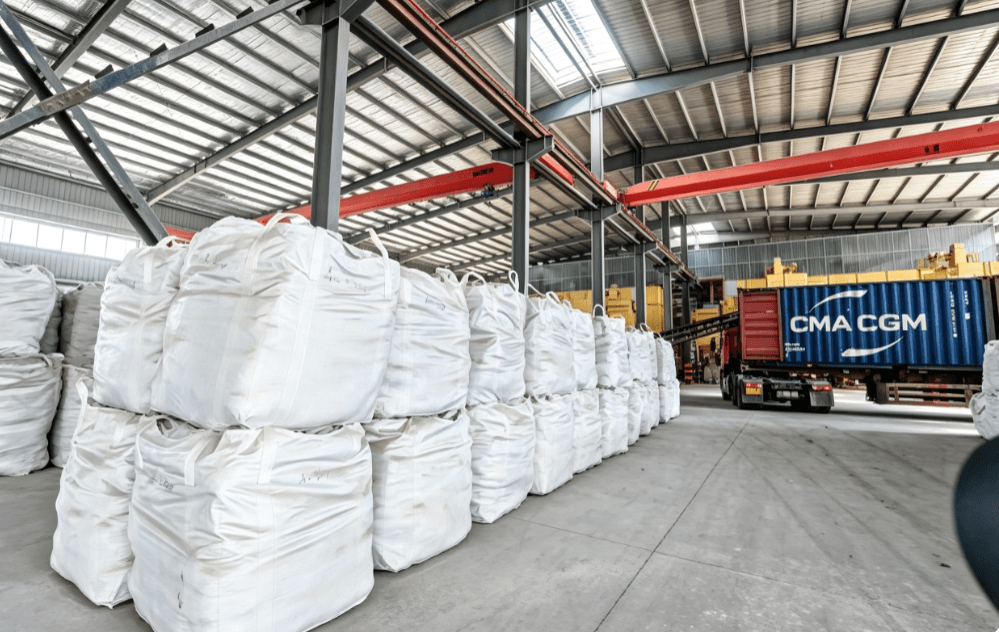
Optimize container utilization by aligning bag and carton dimensions to fully cube out 20GP or 40HQ containers, and add desiccants or vented packaging for humid shipping routes to reduce moisture damage.
For ongoing replenishment, use a rolling 13-week demand forecast with a 3–4 week safety stock buffer, aligned with factory lead times, sailing schedules, and customs clearance windows. For peak seasonal demand, lock in production slots 60–90 days in advance to avoid line congestion and shipping delays.
- ✅ Do: refresh freight quotes and review port/terminal fees quarterly to catch cost creep early.
- ❌ Don’t: wait until inventory hits zero to place reorders—lead time variability is the top cause of preventable stockouts.
Bottom Line
Profitable cat litter distribution is built on clear product specs, comparable supplier pricing, margin discipline, and a supply chain you can count on. MiiCat, based in one of the world’s top three bentonite-producing regions, manufactures a full range of bentonite, plant-based, mineral, and blended cat litters with batch-level QC, third-party test reports, and end-to-end OEM support for distributors.
Whether you’re launching your first private label line, expanding your channel portfolio, or optimizing your replenishment cadence, our distributor program offers tiered pricing, flexible MOQs, and mixed-SKU container loading to fit your growth stage. Request your full distributor price list and 20 kg sample pack today to benchmark costs, test real-world performance, and build a more profitable, reliable cat litter supply chain with MiiCat.


